
Wrongful convictions are not isolated mistakes — they reflect patterns in how cases are investigated, prosecuted, and resolved, and how survivors are left without support after.
A Lifetime of Purpose.
Built From Experience.
Designed for Change.
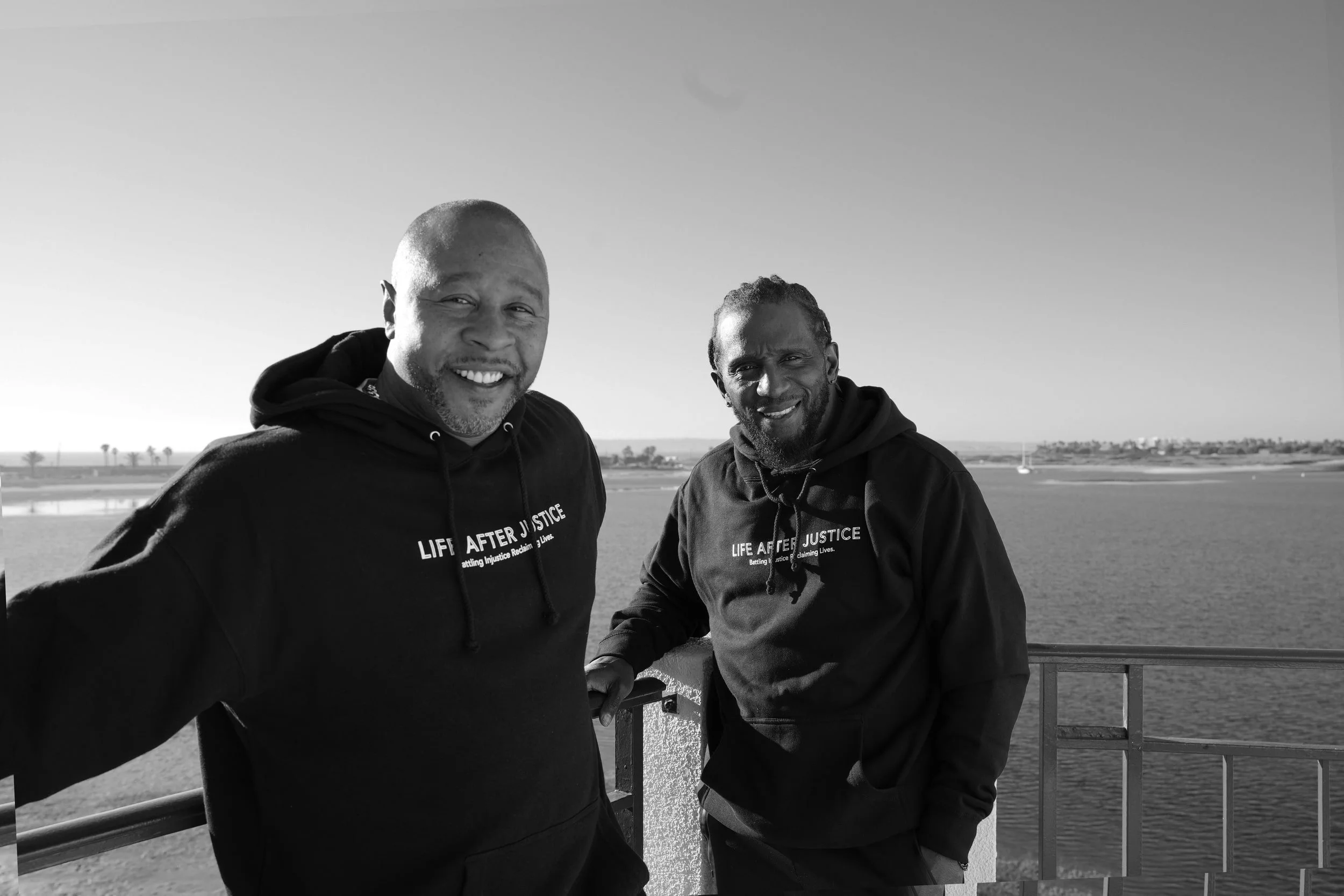
Our work begins with lived experience — and extends across everything we do. We combine strategic litigation, holistic mental health support, and survivor-led research to address wrongful convictions at every stage: securing freedom, supporting healing, and preventing future harm. This integrated model allows us to turn experience into action, and action into lasting change. Survivors don’t just shape our work — they lead it.
We study the patterns behind wrongful convictions — how cases are built, where systems fail, and what happens after release. Grounded in the lived experiences of those most directly impacted, our research turns hard-earned insight into evidence that drives accountability, informs policy, and builds solutions rooted in truth. Through initiatives like Pleas for Freedom (the Alford Plea Project), the National Incentivized Informant Research Project, and the National Amplification Campaign, we translate lived experience into data—and data into action—strengthening advocacy, advancing accountability, and preventing future wrongful convictions.
Pleas for Freedom: The Alford Plea Project
Alford pleas force wrongfully incarcerated people to make an impossible choice: accept a conviction for a crime they did not commit or remain in prison indefinitely. At Life After Justice, we call these “Pleas for Freedom.” Our project documents these cases, elevates survivor stories, and puts a mirror up to a system that makes freedom contingent on surrendering innocence.
The National Incentivized Informant Research Project
Incentivized informant testimony is one of the leading — and most preventable — causes of wrongful convictions. Our preliminary findings show that at least 31% of known U.S. exonerations involved incentivized informants. This first-of-its-kind in depth and scope project examines the role of all types of incentivized informants in known wrongful convictions, partnering with researchers from Cornell University and Boston College.
The National Amplification Campaign
The first-of-its-kind in depth and scope, survivor-led national survey designed by and for people directly impacted by wrongful incarceration and their loved ones. Guided by the principle “Nothing About Us Without Us,” this campaign gathers lived experience through a statistically reliable national sample to illuminate the real needs of the innocence community.